Slow-Learner Support
Slower is not the same as less able. Most learners described as slow are learners who were moved on before the previous step was secure.
What these learners actually need
Three things, and they are not complicated. What is difficult is providing them consistently under syllabus pressure.
- Smaller steps. Not easier work — the same work, divided into more parts. A step that half the class takes in one move may need three moves for others.
- More models. Where a strong learner needs one example, a slower learner may need four. This is not indulgence; it is how the pattern becomes visible.
- More repetition, spaced out. The same point returned to next week, and the week after. A single well-taught lesson is not enough for these learners, and it never was.
Breaking a task into smaller steps
An example: the task is write a formal letter of complaint. For a slower learner, that is not one task but six.
Read a complete model letter and answer three questions about it
No writing yet. Comprehension of the form comes first.
Label the parts of the model
Address, date, greeting, opening, details, request, closing. Physically writing the labels on a copy.
Put a jumbled letter in the right order
The parts are given on separate strips; the student arranges them. Success is achievable and the structure is learnt.
Complete a letter with gaps
The frame is provided; the student supplies the content of two paragraphs.
Write a letter with a plan supplied
The four paragraph headings are given; the student writes the paragraphs.
Write a letter with nothing supplied
Only now. And by now, most of them can.
In the classroom
Do
- Give the same task with more support, not a different and lesser task
- Let them see a completed example before starting
- Check understanding by asking them to explain the task back to you
- Give one instruction at a time
- Allow more time rather than less work where you can
- Return to the same point in three weeks' time, deliberately
- Praise the specific thing that improved
Avoid
- Marking them out publicly as the slow group
- Giving colouring or copying while others do real work
- Repeating the same explanation more loudly
- Correcting every error on a returned script
- Assuming silence means understanding
- Moving on because the syllabus requires it — the time is lost either way
- Using childish material with adolescents
Support that does not single anybody out
The most effective differentiation is invisible. Some ways to provide it:
- A worked first item on every worksheet. Strong students ignore it; weak students need it. Nobody is marked out.
- Extension questions at the bottom, not easier ones at the top. The differentiation happens at the fast end, where it is not stigmatising.
- Pair deliberately. A slower learner paired with a patient stronger one gains an explanation in language closer to their own; the stronger learner gains from having to explain.
- Word banks on the board. Available to everyone, used mainly by those who need them.
- Sentence starters for writing tasks. One reason is… This shows that… Given to the whole class; taken up by those who need them.
- Ask the easier question first, and direct it to the student who needs the success. Done naturally, no one notices.
The thing that matters most
Keep the student's earliest piece of work. Show it to them after two months.
A learner who has been slow for years is convinced they cannot improve, and no amount of encouragement changes that conviction. Their own handwriting from September, held next to their handwriting from November, does.
Books written for exactly this
RCF Publications produces a support book for each grade from 6 to 11, written for pupils who have fallen behind and need to rebuild English slowly.
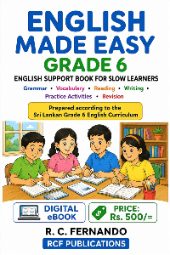 English Made Easy: Grade 6See it in RCF Publications
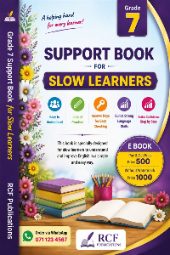 Grade 7 Support Book for Slow LearnersSee it in RCF Publications
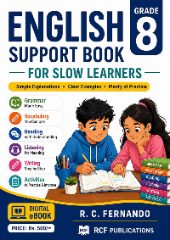 Grade 8 English Support Book for Slow LearnersSee it in RCF Publications
 Grade 9 English Support Book for Slow LearnersSee it in RCF Publications
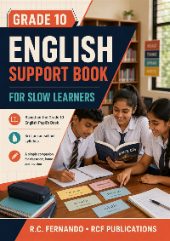 Grade 10 English Support Book for Slow LearnersSee it in RCF Publications
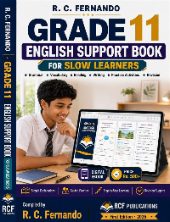 Grade 11 English Support Book for Slow LearnersSee it in RCF Publications